
Can You Get Hip Impingement in Both Hips?
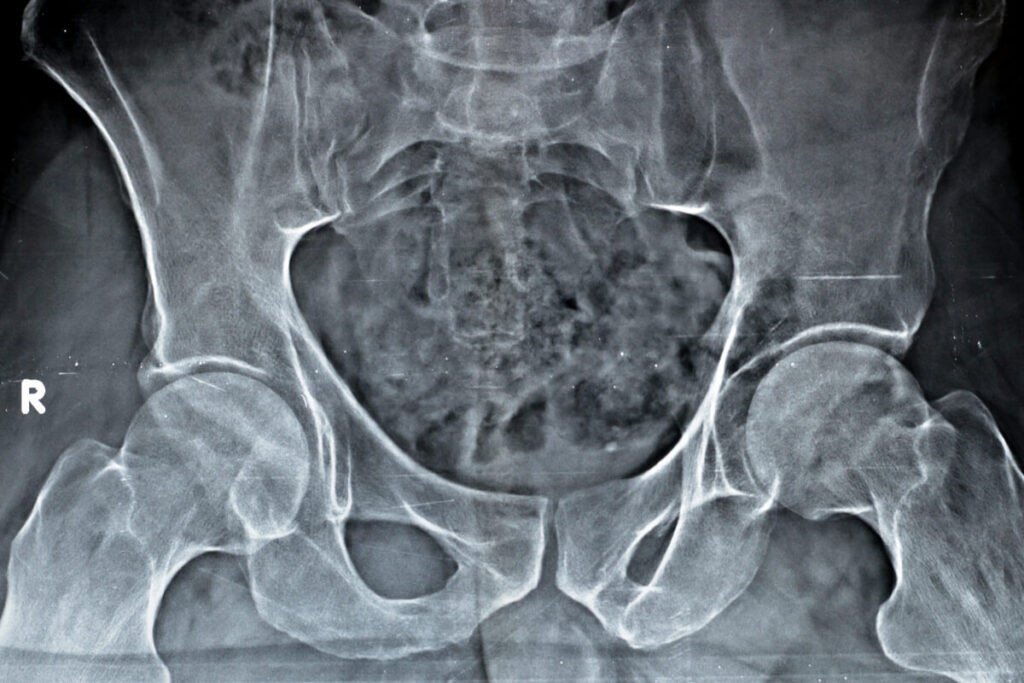
If you’ve been told you have hip impingement, it’s natural to wonder whether the other hip is at risk too — especially if you’ve started noticing similar twinges on the opposite side.
The short answer is yes: femoroacetabular impingement (FAI) can affect both hips, and it’s more common than many patients expect.
As a consultant orthopaedic surgeon who sees hip impingement regularly, I want to walk you through what bilateral FAI actually looks like, how often it happens, and what it means for your treatment.
What is hip impingement, in brief
Femoroacetabular impingement happens when the ball (femoral head) and socket (acetabulum) of the hip joint don’t glide together smoothly.
Extra bone forms on the femoral head, the socket rim, or both, so the two surfaces catch and rub against each other during normal movement — particularly when bending, squatting, or twisting the hip.
There are three types:
- Cam impingement — extra bone on the femoral head-neck junction reduces clearance during hip flexion and rotation.
- Pincer impingement — the socket over-covers the femoral head, usually because the acetabulum is angled or positioned abnormally.
- Combined (mixed) impingement — both cam and pincer changes are present, which tends to cause faster wear on the joint.
Over time, this repeated friction can damage the labrum (the cartilage rim that seals the joint) and, eventually, the joint surface itself.
So, can it affect both hips?
Yes. FAI is a developmental condition — the bony shape of the hip forms this way during growth, most often in adolescence or early adulthood.
Because both hips develop under similar genetic and mechanical influences, it’s common for the underlying bone shape to be present on both sides, even if only one hip is currently causing pain.
Research backs this up. In a review of over 600 patients who underwent surgery for FAI, around 21% had bilaterally symptomatic impingement — meaning both hips were painful enough to need treatment.
Younger patients were particularly affected: those under 25 had markedly higher rates of bilateral disease requiring surgery than older patients, and having fewer other health conditions was also linked to a higher chance of both hips being involved.
It’s also worth knowing that X-rays often show cam or pincer changes on both sides even when a patient only has symptoms on one.
Studies following these “silent” hips found that a meaningful proportion go on to become painful over time, particularly in younger patients and those with more pronounced bony changes on imaging.
Why does the second hip often follow?
A few factors make the opposite hip worth keeping an eye on:
- Shared anatomy. If the bone shape that causes impingement developed on one side, it very often developed similarly on the other, since both hips form under the same growth pattern.
- Age and activity. FAI is most often diagnosed in active people between 20 and 45, and high-impact or repetitive hip movement — common in sport — tends to bring symptoms out earlier on both sides.
- Compensation. Once one hip becomes painful, people naturally shift more load onto the other side, which can accelerate symptoms there too.
None of this means a second surgery is inevitable. Many patients live comfortably with mild, asymptomatic changes in the other hip for years, sometimes indefinitely.
What are the symptoms to watch for?
If your first hip was affected, it’s worth knowing the signs to look out for on the other side:
- Groin or hip pain, particularly with deep bending, pivoting, or prolonged sitting
- Clicking, catching, or a sensation of the hip “giving way”
- Stiffness or a noticeably reduced range of motion
- Pain after sport, or a nagging ache that builds through the day
If these start appearing in the previously “quiet” hip, it’s worth getting it assessed rather than waiting for things to worsen.
How is bilateral hip impingement treated?
Treatment for the second hip follows the same principles as the first, and surgery is not the automatic next step.
Non-surgical management is usually tried first: activity modification, targeted physiotherapy to strengthen the muscles supporting the joint, and anti-inflammatory medication to settle symptoms. Many patients get meaningful relief this way, particularly if the impingement is mild.
When surgery is needed, hip arthroscopy is the standard approach — reshaping the bone and repairing any labral damage through small incisions. If both hips need surgery, your surgeon will discuss whether to treat them one at a time (staged) or, in select cases, together. This decision depends on the severity of each hip, your overall fitness, and your recovery goals, and it’s a conversation worth having in detail before deciding.
The bottom line
Hip impingement in both hips is a recognised and fairly common pattern, not a rare complication. If you’ve had one hip diagnosed or treated, it’s reasonable to stay alert to symptoms on the other side — but it’s not a foregone conclusion that you’ll need the same treatment twice. The right next step is a proper clinical assessment and imaging so you know exactly what’s happening on each side, and can make an informed decision about what, if anything, needs to be done.
If you’re experiencing hip or groin pain on either side and want a clear picture of what’s going on, book a consultation to discuss your symptoms and options.