
Why Is My Knee Clicking After ACL Reconstruction?
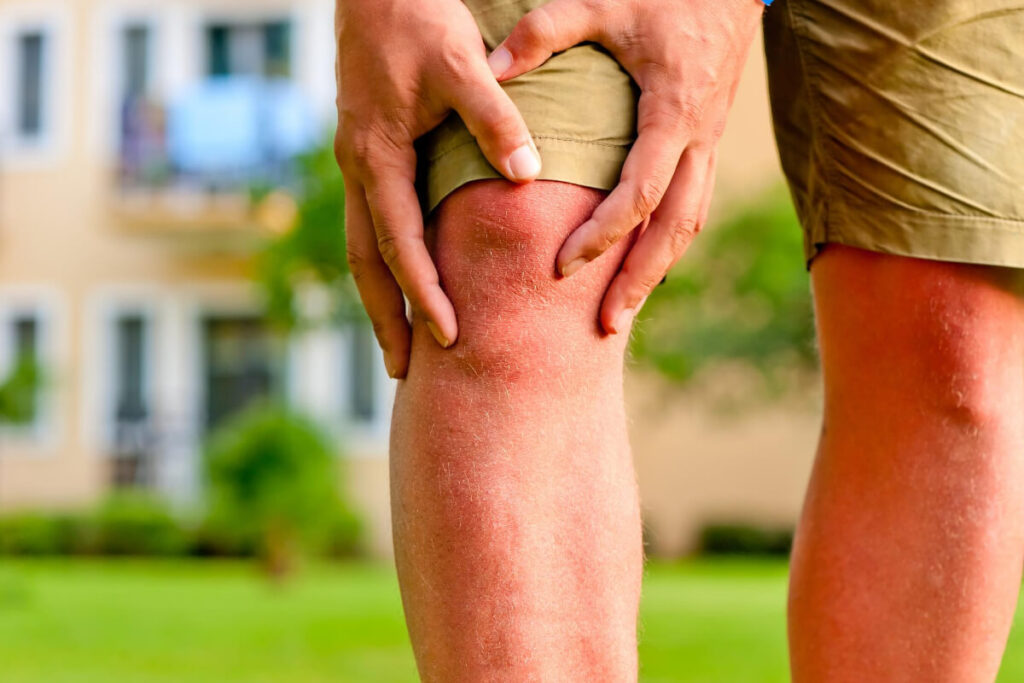
You’re a few weeks or months out from surgery. The knee is behaving itself. Then you stand up from a chair, or climb the stairs, and there it is: a click. Maybe a grinding sensation behind the kneecap. Maybe a single pop you can feel as well as hear.
The first worry is almost always the same. Did I just damage the graft?
Almost certainly not. A graft that fails usually announces itself with a proper injury: a twist or a landing, a sudden give, and swelling within hours. A painless click during everyday movement is a very different thing. Still, “most clicking is normal” isn’t much comfort if you don’t know which kind you have, so this article goes through what the different noises tend to mean, the handful of signs that do warrant a review, and what a surgeon actually looks for when a patient comes in worried about a noisy knee.
Is It Normal for a Knee to Click After ACL Surgery?
Yes. It’s one of the most common things patients mention at follow-up.
An ACL reconstruction changes a lot inside the knee at once. There’s swelling in the joint. The quadriceps switches off to a surprising degree for the first few weeks. Tissue in the front of the knee has been handled, and a new graft now sits in the notch where the old ligament used to be. With all of that settling at different speeds, the knee moves a little differently for a while, and a joint that moves differently often makes noise.
What matters more than the noise itself is what comes with it. A click on its own, with no pain, no swelling and no change in how the knee functions, is rarely a problem. A click that brings pain, catching, or a knee that won’t fully straighten is a different conversation.
What Does the Research Say About Noisy Knees After ACL Reconstruction?
The best recent evidence is reassuring. A study from La Trobe University, published in Arthritis Care & Research in 2025, followed 112 young adults for five years after ACL reconstruction. People who reported crepitus (that grinding or crackling feeling) at one year were more likely to have cartilage changes behind the kneecap on MRI at that point, and they reported a bit more pain. But between one and five years, crepitus did not predict worsening cartilage damage, new bone spurs or other early signs of osteoarthritis. Pain and function in the crepitus group also improved over time and closed the gap.
In plain terms: a noisy knee after ACL surgery is not, by itself, a sign that the joint is wearing out.
The Common Causes of Clicking After ACL Reconstruction
The kneecap is tracking differently for now
This is the most frequent cause, especially in the first few months. The quadriceps, and particularly the inner part of it (vastus medialis), weakens quickly after surgery. When it isn’t pulling evenly, the kneecap glides slightly off its usual path in the groove at the end of the thigh bone. You’ll typically feel this as grinding or clicking behind the kneecap on stairs, squatting or getting up from low seats.
It tends to fade as strength comes back. If you had a patellar tendon graft, some front-of-knee sensitivity and crepitus is a little more common because that area was the donor site.
Swelling and fluid in the joint
A swollen knee doesn’t move as smoothly. Fluid shifts, soft tissues are thickened, and you can get soft clicks or a crackly feeling as the joint bends. This settles as swelling does, which for most people means gradual improvement over the first two to three months.
Scar tissue and soft tissue catching
Some scar tissue is a normal part of healing. Small bands or folds of tissue at the front of the knee (in the fat pad or around the kneecap) can flick over each other as the knee bends and straightens. These clicks are usually painless and ease as rehab restores full range of movement.
A cyclops lesion
This one is worth knowing about because it’s the most common “real” cause of a clunk after ACL surgery, and it’s very treatable.
A cyclops lesion is a small nodule of scar tissue that forms at the front of the graft, where it enters the knee. When you straighten your leg, the nodule gets pinched between the graft and the thigh bone. Patients often describe a clunk as the knee reaches full extension, along with difficulty getting the last few degrees of straightening back, a feeling of blockage at the front of the knee, or pain when standing with the knee locked straight.
A large Danish study of 2,556 patients found that around 7% needed a keyhole procedure to remove a cyclops lesion within two years of their ACL reconstruction. The rate was higher in women than men and varied with the drilling technique used. Age, graft type and meniscal or cartilage damage made no significant difference. If you’re struggling to fully straighten your knee and there’s a clunk at the end of the movement, this needs to be looked at. Leaving it too long can make extension harder to recover.
Meniscus or cartilage issues
If the meniscus was repaired or trimmed during your operation, a bit of clicking while it heals isn’t unusual. What’s less normal is catching or locking, where the knee sticks in one position until you wiggle it free. That can mean a meniscal repair hasn’t fully healed, a new tear has developed, or a loose fragment of cartilage is moving around the joint. Our page on meniscal repair explains how those injuries are managed.
The fixation hardware
The graft is held in bone tunnels with screws, buttons or similar devices. These sit inside bone and are very rarely the source of an internal click. Occasionally, though, a screw or fixation device on the shin side can be felt under the skin, and tendons can flick over a prominent one, causing a localised click and tenderness at that exact spot. If you want to know what’s actually holding your graft in place, our article on what metal is used in ACL reconstruction covers it.
Graft impingement
Less commonly, the graft can rub against the roof of the notch in the thigh bone when the knee is straight, usually because of tunnel position. It behaves a lot like a cyclops lesion: loss of full extension and discomfort at the front of the knee. An MRI helps tell the two apart.
Click, Pop or Clunk: What’s the Difference?
Patients use these words loosely, but the distinction helps.
- Soft clicks or crackling, especially behind the kneecap and without pain: nearly always the kneecap, swelling or soft tissue. Keep going with rehab.
- A clunk at the end of straightening, especially if you can’t get the knee fully straight: think cyclops lesion or impingement. Get it reviewed.
- Catching or locking that stops the knee moving until you shift it: think meniscus or a loose body. Get it reviewed.
- A loud pop during a twist or landing, followed by swelling or giving way: this is the pattern of a graft injury. Get it reviewed promptly and read our guide on what happens if ACL reconstruction fails.
What to Expect Over Time
Every knee recovers at its own speed, but this is the rough pattern most patients follow.
| Stage after surgery | What’s common | What deserves a call |
|---|---|---|
| 0 to 6 weeks | Soft clicks, crackles, a “watery” feel as swelling moves around | Rapidly increasing swelling, heat, redness, fever |
| 6 weeks to 3 months | Kneecap grinding on stairs and squats as the quads rebuild | Knee won’t fully straighten, or loses straightening it previously had |
| 3 to 6 months | Occasional painless clicks, generally reducing | A clunk at full extension, catching, locking |
| 6 months onwards | Many knees are quiet; some stay noisy without any problem | New pain with the noise, recurring swelling, or instability |
If your rehab feels slower than this, you’re not alone. Our article on why ACL recovery can take longer than expected goes through the common reasons.
When Should You Get Clicking Checked?
Contact your surgeon or physiotherapist if the clicking comes with any of the following:
- You can’t fully straighten the knee, or you’re losing extension you previously had
- The knee catches or locks
- Swelling that comes back after activity, or doesn’t settle
- Pain that is sharp and in one spot every time it clicks
- The knee gives way or feels unstable
- Redness, heat or a temperature, particularly in the first few weeks. These can be signs of infection and need same-day advice. See our guide to infection after ACL surgery.
What Your Surgeon Will Check
A clinic review for a noisy knee is usually fairly quick. It starts with the story: when the clicking started, what brings it on, and whether anything else has changed. Then the examination focuses on a few specific things. Can the knee straighten fully compared with the other side? Is there fluid in the joint? Where exactly is the click, and does it come from behind the kneecap, the joint line, or the front of the graft? Is the graft itself stable on testing?
For many patients, that’s enough to reassure. If there’s a block to straightening, catching, or recurring swelling, an MRI is the usual next step. It shows a cyclops lesion clearly and is good at picking up meniscal tears and loose fragments.
How Is Knee Clicking Treated After ACL Surgery?
Most clicking needs no treatment beyond rehab. Rebuilding quadriceps and hip strength improves how the kneecap tracks, which is the fix for the most common cause. Controlling swelling in the early weeks with ice, compression and sensible activity levels helps too. Avoid forcing painful movements through the click, and don’t skip the exercises that restore full straightening: extension lost early is harder to recover later.
When there’s a mechanical cause, a short keyhole procedure usually sorts it. A cyclops lesion can be removed through a knee arthroscopy, normally as a day case, and most patients regain their straightening quickly afterwards. A meniscal problem or loose body can be dealt with the same way. A prominent screw that is genuinely symptomatic can occasionally be removed, though this is usually left until the graft is fully healed into its tunnels.
How Mr Webb Approaches a Clicking Knee
In clinic, Mr Webb’s first question about a noisy knee is whether it’s doing what it should at this stage of recovery. A knee that straightens fully, doesn’t swell and feels stable can make a fair amount of noise and still be recovering well. In those cases the most useful thing is usually reassurance and a push on strength work. When the click comes with lost extension, catching or swelling, the aim is to find the cause early, because problems like a cyclops lesion are much easier to deal with before stiffness sets in.
If you’ve had ACL reconstruction and your knee is clicking in a way that worries you, whether you were operated on by Mr Webb or elsewhere, he can assess it at his clinics in London and Surrey.
Frequently Asked Questions
Can clicking damage my ACL graft?
No. A painless click doesn’t put meaningful stress on the graft. Grafts fail from injury, typically twisting or landing, not from normal joint noise.
Will the clicking go away?
For most people it reduces a lot over the first six months as swelling settles and strength returns. Some knees stay a little noisy long term without any problem, which is also true of plenty of knees that have never had surgery.
Is clicking after ACL surgery a sign of arthritis?
Not by itself. Recent five-year follow-up research found that crepitus after ACL reconstruction did not predict worsening cartilage damage or early osteoarthritis.
Why does my knee clunk when I straighten it after ACL surgery?
A clunk at full extension, especially if you can’t get the knee completely straight, is the classic pattern of a cyclops lesion. It’s very treatable, but it should be assessed rather than left.
Should I stop my exercises if my knee clicks?
Not if it’s painless. Keep going, and mention it to your physiotherapist. If a specific exercise causes a painful click every time, modify it and get it looked at.