
ACL and Meniscus Surgery Recovery: What Changes When Both Are Fixed
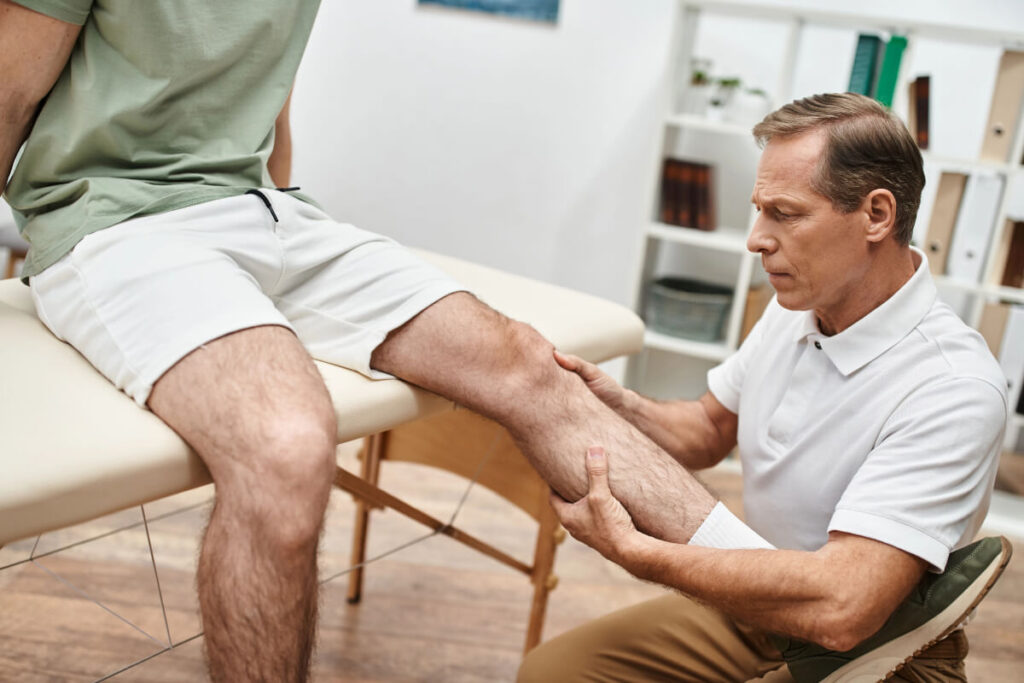
About half of all torn ACLs come with a meniscus injury too. So if your surgeon said they’d “deal with the meniscus while they’re in there,” you’re in very common company.
What most patients don’t realise is how much that one extra step can change the first six weeks. Two people can have the same ACL reconstruction on the same day and walk out with completely different instructions. One is off crutches in a fortnight. The other is told to keep weight off the leg for a month and not bend the knee past a right angle. The difference is almost always what happened to the meniscus.
This guide explains why, what the timeline looks like for each type of meniscus surgery, and which parts of recovery the meniscus does and doesn’t slow down.
Repaired or Trimmed? The Question That Sets Your Timeline
The meniscus is the rubbery, C-shaped cushion that sits between the thigh bone and shin bone. When it tears alongside the ACL, there are two broad ways to treat it during the same operation. Your operation note will say which one you had. If it doesn’t, ask, because it decides most of what follows.
Meniscus trimmed (partial meniscectomy)
The torn, unstable piece is removed and the edge is smoothed. Nothing needs to heal, so there’s nothing to protect. Recovery runs almost exactly like a standard ACL reconstruction, with full weight bearing as soon as comfortable and no brace for the meniscus.
The catch is long term rather than short term. Less meniscus means more load on the cartilage, and that raises the risk of arthritis years later. That’s why surgeons try to repair whenever the tear allows it.
Meniscus repaired (stitched)
The tear is stitched back together so it can heal. Our page on meniscal repair covers the technique. Healing stitched meniscus takes weeks, and deep bending plus heavy load squeeze the repair. So for roughly the first six weeks you’ll usually have restrictions on top of the normal ACL rehab: limited weight through the leg, a hinged brace, and a cap on how far the knee bends.
Root or radial repairs: the strictest group
Some tears cut right across the meniscus or pull it off its anchor point on the bone (a root tear). These lose the meniscus’s ability to hold load at all, and the repair is under real tension. Protocols here are tighter. Many surgeons keep patients completely off the leg for four to six weeks, and deep squatting stays off the table for four to six months.
ACL and Meniscus Surgery Recovery Timeline
Every surgeon’s protocol differs a little, and yours takes priority. This is a realistic picture of how the three groups compare.
| Stage | ACL + meniscus trimmed | ACL + meniscus repair | ACL + root or radial repair |
|---|---|---|---|
| Weight bearing | As comfortable from day one | Partial (often 25 to 50%) for around 4 to 6 weeks | Often none for 4 to 6 weeks |
| Crutches | Usually 1 to 3 weeks | Usually 4 to 6 weeks | Usually 6 to 8 weeks |
| Brace | Often none | Hinged brace for around 6 weeks | Hinged brace for 6 weeks or more |
| Knee bend limit | None, work towards full movement | Usually 90 degrees for 4 to 6 weeks | 90 degrees, sometimes for longer |
| Deep squats under load | Built up with ACL rehab | Avoided for around 4 months | Avoided for 4 to 6 months |
| Straight-line running | Around 3 months | Around 4 months | Around 4 to 5 months |
| Pivoting and contact sport | 9 to 12 months | 9 to 12 months | 9 to 12 months |
Look at the last row. The meniscus changes the start of recovery a great deal. It barely moves the end, because the ACL graft sets the pace for return to sport whatever happened to the meniscus.
Crutches and Walking
With a repair, expect four to six weeks on crutches, putting partial weight through the leg with the brace on. That’s longer than the one to three weeks most people need after ACL reconstruction alone, which our guide to how long you use crutches after ACL reconstruction covers in more detail.
It feels slow. Patients often say the knee feels ready before they’re allowed to walk normally. That feeling is real, because the ACL graft copes with walking load early. The meniscus is the part that isn’t ready, and it can’t tell you so.
Stairs are fine on crutches from the start, using the usual pattern: good leg first going up, operated leg first coming down.
The Brace, and When You Can Sleep Without It
A hinged brace is standard after a meniscus repair, even though many isolated ACL reconstructions don’t use one. It does two jobs. While you walk, it’s usually locked straight so the knee can’t buckle under load. At other times it’s unlocked to a set range, often 0 to 90 degrees, so you can move the knee without bending it too far.
Most people are asked to sleep in the brace for the first few weeks, locked straight. That protects the repair if you roll over and keeps the knee fully straight overnight, which matters a lot for the ACL. Sleeping without it usually comes at the same point the brace comes off for walking, which for most repairs is around six weeks. Don’t stop earlier on your own, even if it’s uncomfortable. Ask your physio whether the straps or settings can be adjusted instead.
For setting up your pillows and getting through the first nights, see our guides to the best way to sleep after ACL reconstruction and when you can sleep on your side. Both apply after combined surgery. Side sleeping with a pillow between the knees is still possible in the brace once early pain settles. If you’re wondering about brace types, our article on the best knee brace for ACL reconstruction explains the options.
Why You’re Told Not to Bend Past 90 Degrees
As the knee bends, the thigh bone rolls back onto the rear part of the meniscus. That’s where most repairable tears are. Past about 90 degrees, and especially with body weight on top, the compression and shear across the repair rise sharply. Hence the limit.
The rule is about deep bending under load, not about moving at all. Gentle bending within the allowed range is encouraged from the first days, because a stiff knee is its own problem. Getting the knee fully straight remains the top priority, exactly as with any ACL reconstruction.
Movements that commonly catch people out in the early weeks include sitting back on your heels, deep squatting to pick something up, a low sofa, and the bottom of a stationary bike’s pedal stroke if the seat is set too low.
Driving and Getting Back to Work
You can drive once you can do an emergency stop safely and you’re off crutches. After a right knee repair, that’s rarely before six weeks. After a left knee operation in an automatic car it can be sooner, but check with your insurer either way.
Desk-based work is usually manageable from two to four weeks if you can keep the leg raised and get there safely. Jobs that involve standing, walking or carrying are harder, because the crutch period runs longer. Manual work that involves kneeling or squatting often needs three to four months, sometimes more.
When Can You Run After ACL and Meniscus Surgery?
Straight-line jogging after ACL reconstruction usually starts around three months, once strength and control tests are met. Our article on when you can start running after ACL reconstruction lists those criteria. A meniscus repair commonly pushes that to around four months, because running loads the meniscus repeatedly and the repair needs a little longer to mature.
The time isn’t the only gate. Running starts when you can hop, single-leg squat and control the knee well, not when a date on the calendar arrives. People who are restricted for six weeks early on do have more catching up to do. As the next section shows, most of them catch up.
Return to pivoting, cutting and contact sport stays at nine to twelve months, decided by testing.
Does All That Early Protection Set You Back?
It’s a reasonable worry. Six weeks of partial weight bearing means the thigh muscles waste more, and patients often feel they’re falling behind friends who had ACL surgery alone.
The evidence is reassuring. One study compared patients who had ACL reconstruction alone, with a trimmed meniscus, or with a repaired meniscus and six weeks of restrictions. At around six months after surgery, all groups were still weaker than healthy people, but the type of meniscus treatment made no difference to strength, hop testing or symptoms. The early restrictions cost you weeks. They don’t seem to leave you permanently behind.
You may also notice that your instructions differ from a friend’s, or from what you read online. That’s because the evidence doesn’t point to a single right protocol. A systematic review in BMJ Open Sport & Exercise Medicine found that faster rehab with early weight bearing wasn’t linked with more repair failures in the studies available, though protocols varied widely. Many surgeons now set restrictions according to the tear itself. A small, stable repair may be loaded early. A large bucket-handle or root repair gets more protection.
Will the Meniscus Repair Heal?
Most do, and doing it at the same time as the ACL seems to help. When tunnels are drilled for the ACL graft, the bleeding inside the knee carries cells and growth factors that are thought to help the meniscus heal. Just as important, a stable knee stops the repair being ground through every time the knee gives way.
The numbers back this up. A large US multicentre study followed 235 patients for six years after combined ACL reconstruction and meniscus repair, and around 14% needed further surgery on the meniscus. A 2023 meta-analysis of over 3,800 patients found a failure rate of 8.5% when the repair was done with an ACL reconstruction, against 14% in knees with no ACL injury, and lateral meniscus repairs failed less often than medial ones. Not every review finds the ACL advantage, but none suggests it’s a disadvantage.
Most failures show up in the first two years. A repair that fails usually announces itself with catching, locking or recurring swelling at the joint line rather than sudden pain. The fix is often a further keyhole operation to trim the part that didn’t heal, which leaves you roughly where you’d have been with a trim in the first place.
Bad Signs After ACL and Meniscus Surgery
Some clicking, stiffness and swelling is normal, especially in the first three months. Our article on knee clicking after ACL reconstruction covers what’s expected. Contact your surgical team if you notice:
- The knee catching or locking, so it sticks until you wiggle it free
- Sharp pain at the joint line, on the inner or outer side, every time you bend or twist
- Swelling that keeps coming back after activity, or doesn’t settle
- Losing straightening you previously had
- A painful pop during a twist, followed by swelling or giving way. See what happens if ACL reconstruction fails
- Increasing redness, heat, wound leakage or a temperature, which can be signs of infection after ACL surgery
- Calf pain, tenderness or swelling, which can be a sign of a blood clot
Sudden breathlessness or chest pain after surgery needs emergency help. Call 999.
How Mr Webb Approaches Combined ACL and Meniscus Surgery
Mr Webb repairs the meniscus whenever the tear and the tissue allow it. A few extra weeks on crutches is a small price for keeping a structure that protects the knee for decades. Trimming is kept for tears that genuinely can’t heal, such as frayed, degenerate or very central tears. The rehab plan follows the repair: a small stable tear may be allowed to load early, while a root or bucket-handle repair gets a stricter first six weeks.
You’ll know before surgery which outcome is likely, and you’ll leave hospital with written instructions that match what was actually done. If your knee has been operated on elsewhere and the recovery isn’t going the way you expected, he’s happy to review it. Our article on why ACL recovery can take longer than expected may help in the meantime.
Mr Webb sees patients with ACL and meniscus injuries at his clinics in London and Surrey. If you’re weighing up the cost of private treatment, see how much knee ligament surgery costs in the UK.
Frequently Asked Questions
How long is recovery from ACL and meniscus surgery?
Most people walk normally by six to eight weeks, run at around four months, and return to pivoting sport at nine to twelve months. If the meniscus was trimmed rather than repaired, the early stages are quicker and look like ACL reconstruction alone.
Is ACL and meniscus surgery a major operation?
It’s done through small keyhole incisions, usually as a day case or with one night in hospital. The rehab is the major part. Expect most of a year of structured physiotherapy before a return to competitive sport.
Is ACL and meniscus surgery more painful than ACL surgery alone?
Not by much. Most of the early pain comes from the graft site and swelling. A meniscus repair adds some ache at the joint line, and being on crutches longer can be tiring, but pain usually settles at a similar rate.
How long are you on crutches after ACL and meniscus surgery?
Usually four to six weeks after a meniscus repair, and six to eight weeks after a root repair. If the meniscus was trimmed, one to three weeks is typical.
When can I sleep without a brace after ACL and meniscus surgery?
Usually when the brace comes off for walking, which is around six weeks after a repair. Until then, sleep with it locked straight unless your surgeon says otherwise.
Will my knee ever be the same after ACL and meniscus surgery?
Most people return to their previous activities, including sport. Keeping the meniscus through repair gives the knee the best chance of staying healthy long term, which is why surgeons accept a slower start to recovery to save it.
This article gives general information about recovery after combined ACL and meniscus surgery. It isn’t a substitute for the instructions your own surgical team gives you, which are based on exactly what was done in your knee.
Book a consultation with Mr Mark Webb at his London or Surrey clinics, or call +44 20 3824 2298.